Proudly serving Phoenix, Scottsdale, Glendale, Peoria, Paradise Valley, Tempe & surrounding areasCall or Text 24/7: 480-264-8603
Aerial drone view of a suburban neighborhood and desert landscape with Saguaro cacti in Phoenix, AZ.

Circuit Breaker Repair, Testing & Panel Replacement in Phoenix, AZ

Phoenix Electrician Co. provides circuit breaker repair and replacement throughout Phoenix and the Salt River Valley. We diagnose breakers that keep tripping, will not reset, or show signs of overheating, and we also handle electrical troubleshooting, panel upgrades, and emergency electrical repair. Our electricians work with residential and commercial panels while explaining what they find before work begins.

Phoenix summers can push electrical panels hard when temperatures rise above 115 degrees and air conditioners, pool pumps, and refrigerators draw current at the same time. We inspect older Zinsco and Federal Pacific boxes as well as newer Square D and Eaton panels, using calibrated meters and thermal imaging to identify the cause rather than simply resetting a breaker. Work follows National Electrical Code requirements, and required panel permits are coordinated through the City of Phoenix Development Services Department.

Our electricians are licensed through the Arizona Registrar of Contractors and carry insurance coverage for work on your property. Same-day breaker service is available when a hot panel, burning smell, failed breaker, or loss of an AC circuit cannot wait.

Phoenix Electrician Co. provides circuit breaker repair and replacement in Phoenix, Scottsdale, Tempe, Mesa, Glendale, and Chandler.

★ ★ ★ ★ ★4.9/5 Average Rating · 20+ Years of Experience · Thousands of Customers Helped · Licensed & Insured · Residential & Commercial

Circuit Breaker Repair & Replacement

What Is Circuit Breaker Service?

Circuit breakers interrupt current during overloads, short circuits, and ground faults. Repair starts by tracing the affected circuit and comparing its actual amperage draw with the breaker's rating so the underlying fault is not missed.

Breaker replacement is appropriate when internal contacts have worn out, a breaker has become oversensitive, or testing confirms it no longer functions correctly. The replacement must match the panel, circuit amperage, and wire gauge.

When the main panel is full, damaged, obsolete, or too small for the home's current load, a sub-panel or full service upgrade may be the safer long-term approach. We calculate load and inspect the bus bar, grounding, and connections before recommending that larger scope.

Benefits of Professional Breaker Service

A correct diagnosis restores dependable circuit protection without hiding overloads, damaged wiring, or loose connections. Professional service also helps determine whether a focused repair or a broader panel upgrade fits the condition of the electrical system.

  • Circuit load checked against breaker rating
  • Loose connections and corrosion identified
  • Thermal hot spots found before visible damage
  • Replacement matched to panel and wire gauge
  • Grounding and double-tapped breakers checked
  • Bus bar inspected for arc damage
  • Final function test completed under load
  • Repair and upgrade options explained clearly
Breaker and Panel Services

Circuit Breaker Services

From one failed breaker to a panel that has run out of capacity, we match the work to the diagnosis. Services cover urgent faults, planned replacements, new circuits, panel upgrades, and higher-capacity commercial equipment.

Breaker Diagnostics and Repair

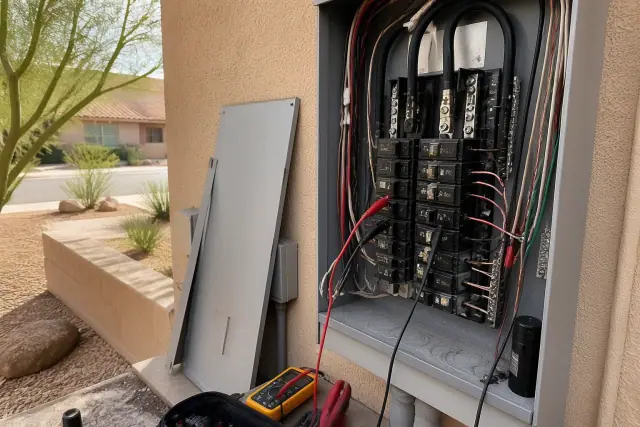
Open electrical service panel with multimeter leads on a circuit breaker at a home in Phoenix, AZ.

We trace repeated trips with amp clamp meters, inspect wiring for insulation damage, and test for overloads and ground faults. Repair addresses the cause along with the damaged breaker so the same problem does not return within a season.

Request Estimate

Circuit Breaker Replacement

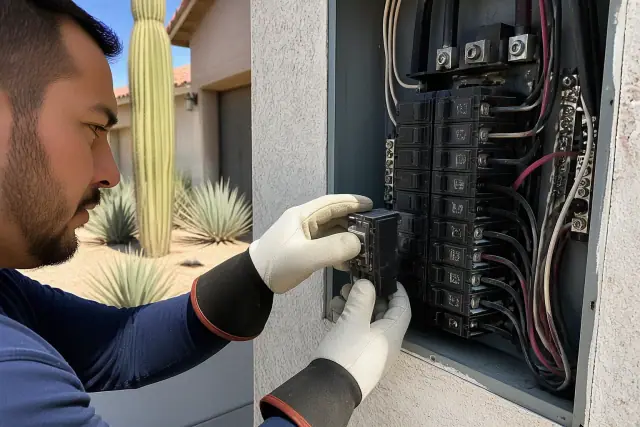
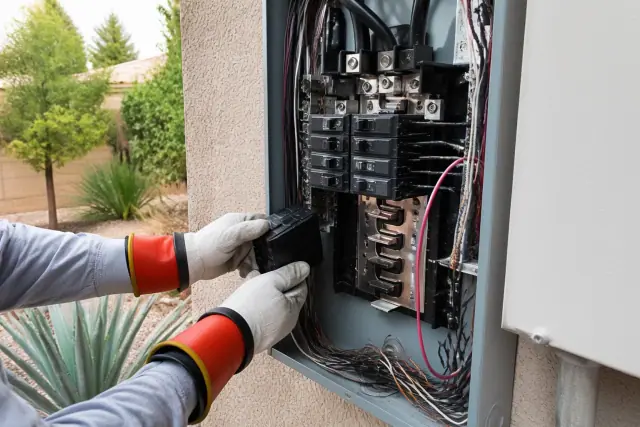
Electrician installing a new circuit breaker in a residential service panel in Phoenix, AZ.

When testing confirms an internal failure, we install a breaker compatible with the panel and correctly rated for the circuit. Connections receive a torque check, and the replacement is function-tested under load.

Request Estimate

Emergency Breaker Repair

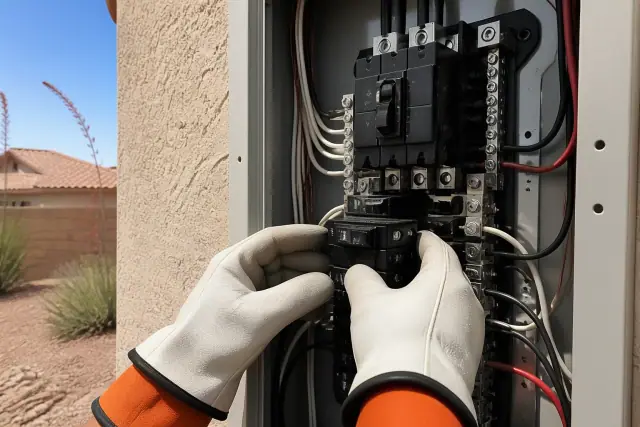
Electrician installing a circuit breaker into a residential service panel in Phoenix, AZ.

Our 24/7 emergency electrical repair service handles burning odors, visible scorching, buzzing panels, breakers that will not reset, and loss of critical AC circuits. Trucks carry common breaker sizes and panel parts so most emergency calls can be resolved in a single visit.

Request Estimate

Electrical Panel Upgrades

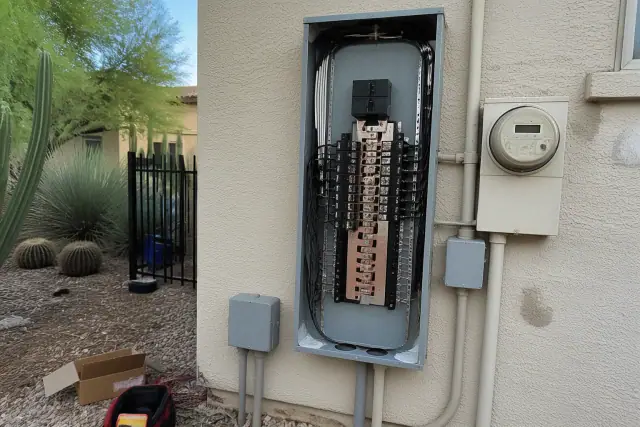
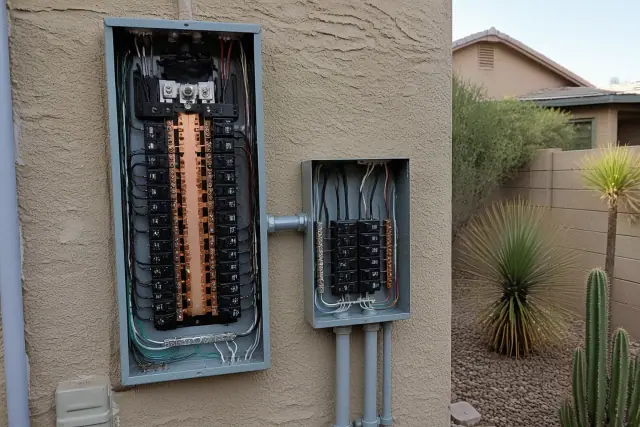
New electrical panel installation with copper bus bars and neatly routed wiring on a stucco wall in Phoenix, AZ.

A full upgrade can replace an obsolete or undersized panel and create capacity for today's electrical load. We calculate demand, coordinate the utility disconnect, handle the required City of Phoenix permit, and schedule inspection.

Request Estimate

Sub-Panels and New Circuit Capacity

New electrical sub-panel and copper bus bars installed on a residential wall in Phoenix, AZ.

A sub-panel can add circuits for a garage, workshop, addition, hot tub, pool equipment, or EV charger when the main panel is full but otherwise serviceable. We size the feed from the actual amperage demand before installing new capacity.

Request Estimate

Residential and Commercial Breaker Work

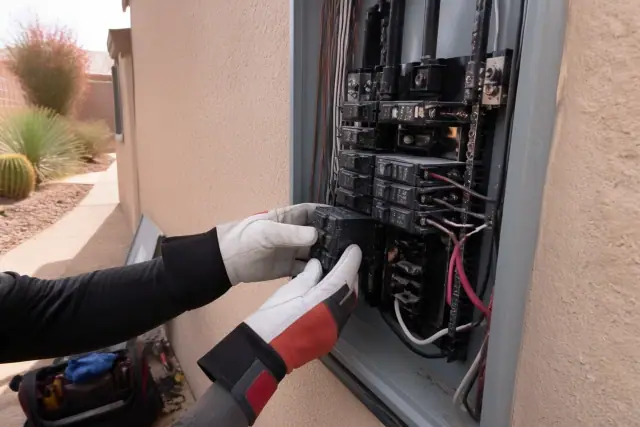
Electrician installing a circuit breaker in a residential service panel in Phoenix, AZ.

Residential work follows load, wire-gauge, torque, and function-testing requirements for the home's panel. Commercial service covers higher-amperage panels and three-phase circuits, with scheduling around business hours when possible to reduce disruption.

Request Estimate
Breaker and Panel Options

Breaker Replacement and Capacity Options

The right solution may be one compatible breaker, a properly rewired higher-amperage circuit, a sub-panel, or a complete service upgrade. Panel condition, available spaces, wire gauge, equipment load, and permit requirements guide that choice.

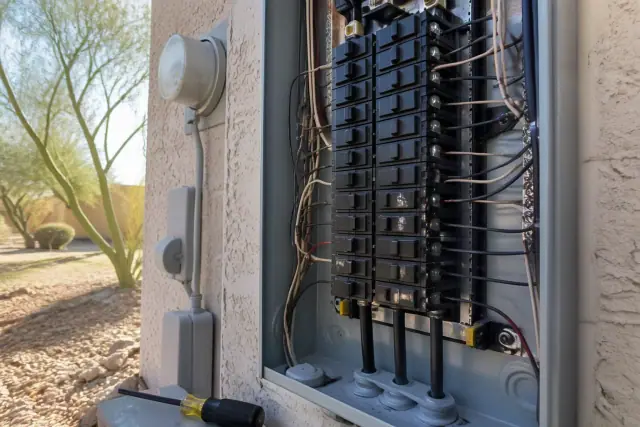
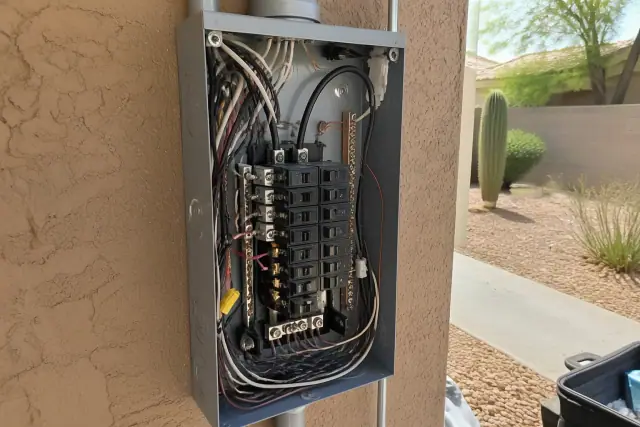
New circuit breaker installed in a residential electrical panel in Phoenix, AZ, with an insulated screwdriver nearby.

Compatible Breaker Replacement

We stock and install breakers compatible with Square D, Eaton, Siemens, and General Electric panels. The breaker type and amperage must match both the panel listing and the connected circuit.

  • Standard single-pole residential breakers
  • GFCI and AFCI specialty breakers
  • Amperage matched to circuit load
  • Panel-compatible manufacturer selection
  • Torque and under-load function testing
Request Estimate
Electrician installing a circuit breaker in a residential service panel at a worksite in Phoenix, AZ.

15-to-20-Amp Circuit Upgrades

Moving a circuit from 15 to 20 amps requires more than changing the breaker. We use appropriately sized 12-gauge wiring and confirm the planned load so breaker rating and conductor size remain correctly matched.

  • Existing 15-amp demand evaluated
  • 20-amp breaker selected for the new circuit
  • 12-gauge conductor installed as required
  • Microwave, window unit, or workshop load considered
  • Final circuit load tested
Request Estimate
Electrician installing a new circuit breaker into a sub-panel in a residential garage in Phoenix, AZ.

Sub-Panel Installation

A sub-panel adds branch-circuit spaces when the main panel is full but does not require replacement. The feeder is sized for the actual amperage needed by the garage, workshop, addition, or new equipment.

  • Main panel condition inspected first
  • New equipment demand calculated
  • Feeder sized to required amperage
  • Garage, workshop, or addition circuits organized
  • New circuits labeled and tested
Request Estimate
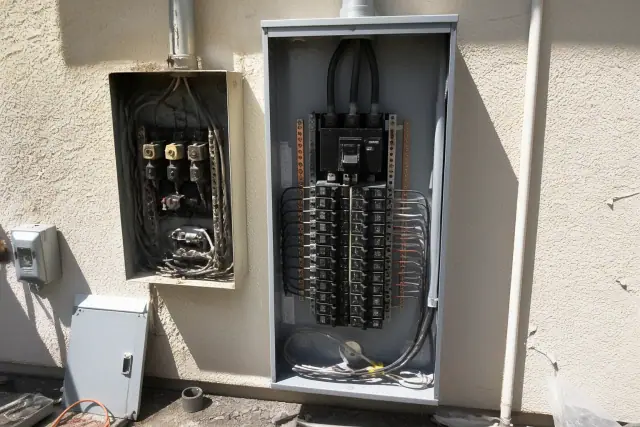
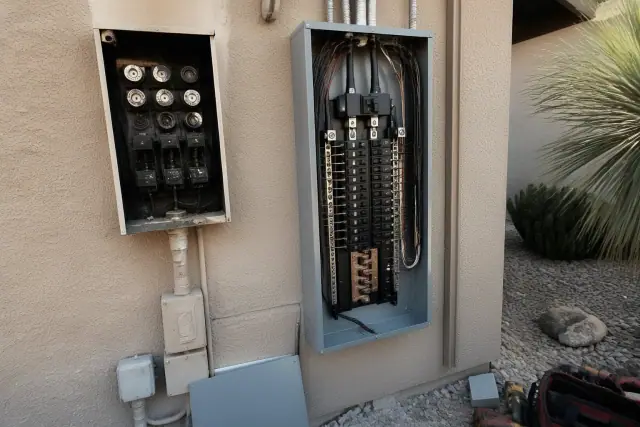
A new electrical panel replacing an old fuse cabinet on a stucco exterior wall in Phoenix, AZ.

Full Electrical Panel Upgrade

A Phoenix panel upgrade commonly moves a home from 100-amp service to 150 or 200 amps. A typical upgrade takes one full day and includes coordination for the permit, utility disconnect, panel swap, and final city inspection.

  • 100-amp service load reviewed
  • 150- or 200-amp upgrade sized
  • City permit and inspection coordinated
  • Salt River Project or APS disconnect scheduled
  • Every circuit clearly labeled
Request Estimate
Electrical panel replacement on a stucco wall at a job site in Phoenix, AZ.

Federal Pacific and Zinsco Panel Replacement

Federal Pacific and Zinsco equipment appears in Phoenix homes built before 1980, including panels dating to the 1960s and 1970s. Because these panel types are known for breakers that may fail to trip during overloads, we recommend full replacement rather than piecemeal breaker swaps.

  • Federal Pacific panel identification
  • Zinsco panel identification
  • Breaker and bus-bar condition reviewed
  • Current home load calculated
  • Complete replacement scope explained
Request Estimate
Finding Your Right Fit

Choosing the Right Breaker Service Approach

The least disruptive safe repair begins with evidence: circuit draw, breaker response, wire condition, connection temperature, available panel capacity, and bus-bar condition. Those findings show whether the job calls for troubleshooting, one replacement breaker, a new circuit, a sub-panel, or a full panel upgrade.

Arizona-Licensed Panel Work

Our electricians are licensed through the Arizona Registrar of Contractors and trained to current National Electrical Code standards. We also carry insurance coverage that protects your property while panel work is underway.

Meter and Thermal Diagnostics

Calibrated meters measure circuit load and breaker function, while thermal imaging reveals hot lugs and terminals before the damage becomes obvious. We also check grounding, double-tapped breakers, loose connections, and bus-bar arc damage.

Phoenix Panel Experience

We understand how extreme heat, constant AC cycling, pool equipment, dust, and damaged attic wiring affect Phoenix electrical systems. Our experience spans older midtown panels and newer equipment in Ahwatukee and North Phoenix.

What Sets Us Apart

Why Choose Phoenix Electrician Co. for Circuit Breaker Service?

We diagnose before replacing parts, show you the cause of the failure, and provide a written quote before work starts. Every repair includes load evaluation, connection checks, and final testing so you understand both the immediate fix and any longer-term capacity concern.

Request Breaker Assessment

Repeated Breaker Tripping

A breaker that trips repeatedly may be responding to an overloaded circuit, a failing appliance, damaged wiring, or its own worn internal mechanism. We compare actual amperage draw with the rating instead of treating every trip as a bad breaker.

Breaker Will Not Reset

A switch that will not stay reset can indicate a short circuit, ground fault, or internal breaker failure. Repeatedly forcing it risks arcing inside the panel, so the affected circuit should be professionally tested.

Burning Smell or Hot Panel

A hot-plastic odor or unusual heat near the panel can come from a loose lug or a breaker failing internally. This is an electrical emergency that warrants a same-day inspection rather than another reset attempt.

Buzzing or Scorch Marks

Buzzing, visible discoloration, or scorch marks can point to arcing or an overheated connection. Turn away from the panel and arrange emergency inspection instead of opening the cover or touching the affected breaker.

Overloaded or Undersized Circuits

If the microwave and AC cannot run together without a trip, the circuit or panel may no longer fit the way the home uses electricity. We determine whether load redistribution, a correctly wired higher-amperage circuit, a sub-panel, or a full upgrade is appropriate.

Aging or Damaged Panels

Corrosion, loose connections, pest-damaged insulation, bus-bar arcing, and obsolete panel designs can all turn a breaker symptom into a panel-level problem. A reset pattern that occurs weekly is useful diagnostic information, especially in older Arcadia, Maryvale, and Sunnyslope homes.

How it works

Our Circuit Breaker Service Process

Our three-stage inspection covers visual assessment, thermal imaging, and comprehensive safety testing. Six clear service steps then take the call from the first symptom through diagnosis, recommendation, repair, and final verification.

01.

Describe the Breaker Symptoms

Tell us which circuit is affected, what was running when it tripped, how often it happens, and whether you noticed heat, odor, buzzing, or power loss. That history helps prioritize immediate safety concerns before testing begins.

02.

Inspect the Panel

We visually check the panel for corrosion, discoloration, loose connections, double-tapped breakers, grounding concerns, and arc damage on the bus bar. The panel type and available circuit capacity are documented at the same time.

03.

Test Circuit Load and Faults

Amp clamp meters measure actual draw against the breaker rating, while dedicated testing equipment checks for ground faults. Wiring is inspected for damage that could make a replacement breaker trip again.

04.

Scan for Hidden Heat

A thermal imaging camera checks lugs, terminals, and breakers for hot spots that may not be visible. This helps locate a failing or loose connection before it progresses to visible damage.

05.

Review the Diagnosis and Quote

We explain whether the breaker, wiring, appliance load, or panel condition caused the failure. You receive a written quote before work starts and an explanation of whether the job requires a permit.

06.

Complete and Verify the Repair

After the approved repair or replacement, we torque connections, verify grounding, test breaker function under load, and confirm safe operation. New or reorganized circuits are labeled clearly before the job is complete.

Get Better Service

Schedule Circuit Breaker
Service in
Phoenix

If a breaker keeps tripping, will not reset, or makes the panel hot, schedule a professional diagnosis before the fault gets worse. We will inspect the circuit, explain the options, and provide a written estimate before approved work begins.

Breaker Service Help

Circuit Breaker FAQs

These answers cover breaker repair costs, common failure signs, panel upgrades, permits, lifespan, and professional diagnosis in Phoenix. Call if your panel is hot, buzzing, scorched, or unable to restore a critical circuit.

Call Our Electricians

Call a licensed electrician for circuit breaker repair. A qualified electrician can determine whether the breaker, wiring, connected appliance, or panel is causing the problem and can match the repair to National Electrical Code and load requirements.

A standard breaker replacement in the Phoenix area typically costs $100 to $400, with most single-pole residential breakers falling between $150 and $300 including labor. Full panel repairs involving multiple breakers or bus-bar issues commonly range from $230 to $470 in parts and labor. Breaker type, amperage, specialty protection such as GFCI or AFCI, and panel access affect the written quote.

A loose or overloaded connection can generate heat over time and degrade the breaker's internal contacts. Circuit overload, age, corrosion, and pest-damaged wiring are other causes, especially when AC and pool equipment run through Phoenix's hottest months.

Most circuit breakers are rated for 15 to 40 years, depending on manufacturer, panel type, and load conditions. Properly maintained breakers show roughly a 2 percent annual failure rate during the first 15 years, rising closer to 5 percent annually after that. Phoenix heat can shorten effective life, so an inspection is sensible for an original panel in a home built before the mid-2000s.

The first step is to confirm the service disconnect is off, but parts of a panel can remain energized even when individual breakers are switched off. A licensed electrician should then verify that the breaker is actually defective rather than reacting to overload or a wiring fault. Because of arc-flash and code risks, this is not a DIY repair.

An individual breaker swap on an existing circuit generally does not require a permit, but a full panel replacement or service upgrade does. Phoenix Electrician Co. handles the permit through the City of Phoenix Development Services Department and schedules the required inspection for panel upgrade work.

A failing breaker does not typically create a power surge, but it may fail to protect a circuit from one. Degraded contacts can trip too slowly or not at all during a fault, so testing is important when breakers are old or monsoon-related grid fluctuations have raised concerns.

Burning smells, visible scorch marks, buzzing, unusual panel heat, a breaker that will not reset, or loss of power to part of the home all warrant urgent inspection. In Phoenix summer heat, loss of an AC circuit can also become a safety concern because indoor temperatures may climb to dangerous levels within hours.

A panel upgrade may make more sense when the existing panel is obsolete, damaged, full, or too small for the home's current demand. Load calculations and inspection of the breakers, bus bar, grounding, and available spaces determine whether a targeted repair remains appropriate.

Not unless the circuit is designed for 20 amps and uses appropriately sized 12-gauge wiring. Simply installing a larger breaker on undersized wiring removes needed protection. We evaluate the load and conductor size before recommending a 15-to-20-amp circuit upgrade.

We trace the affected circuit, measure actual draw with an amp clamp meter, compare it with the breaker rating, and test for ground faults. Wiring insulation, appliance loads, panel connections, and thermal hot spots are also checked so the repair addresses the root cause.

If the main panel is otherwise serviceable and has adequate load capacity, a sub-panel can add branch circuits for a garage, workshop, addition, pool equipment, hot tub, or EV charger. We size the feeder to the actual demand before recommending installation.

We work with Square D, Eaton, Siemens, and General Electric panels and their compatible breakers. Older Federal Pacific and Zinsco panels generally call for full replacement rather than a compatible breaker swap because of their known failure concerns.