Electrical Repair & Troubleshooting
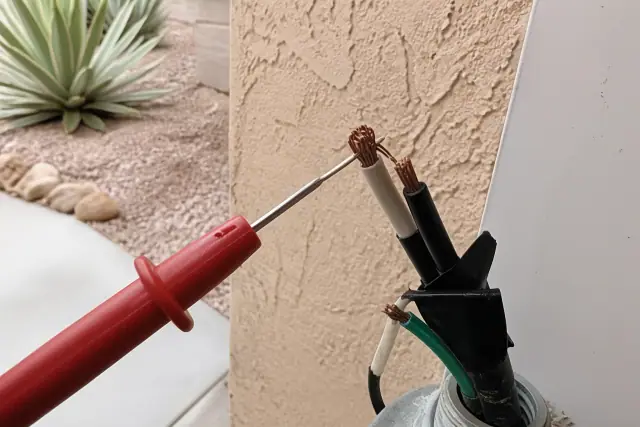
Circuit tracing, thermal inspection, and load testing help locate loose neutrals, wiring faults, overloaded circuits, and failed devices without replacing parts by guesswork.
Explore Service
Phoenix Electrician Co. provides electrical repair and troubleshooting for homes and businesses in Sun City, AZ, along with emergency repairs, panel upgrades, EV charger installation, outlets, switches, lighting, ceiling fans, circuit breakers, commercial work, and whole-home rewiring. Our licensed, bonded, and insured electricians work on Del Webb-era ranch homes, manufactured residences, newer site-built properties, medical offices, retail plazas, and service businesses. We serve the community with code-conscious diagnostics, repairs, and installations designed around each property and its electrical load.
Sun City electrical systems face summer temperatures that regularly exceed 115°F, monsoon-season surges, and the demands of modern air conditioning, appliances, electronics, and EV charging. A large share of local homes was built between 1960 and the mid-1970s, when 60-amp and 100-amp panels and older grounding practices were common. Homes wired between 1965 and 1973 may also contain aluminum branch circuits that need careful connection-point inspection. Diagnostic testing helps separate a failed device from overloaded circuits, loose connections, deteriorated wiring, and aging panel components before a repair begins.
For projects that require permits, Phoenix Electrician Co. coordinates with Maricopa County Planning and Development and schedules the applicable inspection. Call to describe the symptoms and arrange a diagnostic visit.
Our Sun City work covers original Del Webb neighborhoods, areas near recreation centers and golf courses, and properties along Grand Avenue and 99th Avenue. We also serve Sun City West, Sun City Grand, Youngtown, Peoria, El Mirage, and Surprise across the northwest Valley. Property owners comparing electrical support elsewhere in the Valley can review our Scottsdale, AZ service page.
Circuit tracing, thermal inspection, and load testing help locate loose neutrals, wiring faults, overloaded circuits, and failed devices without replacing parts by guesswork.
Explore Service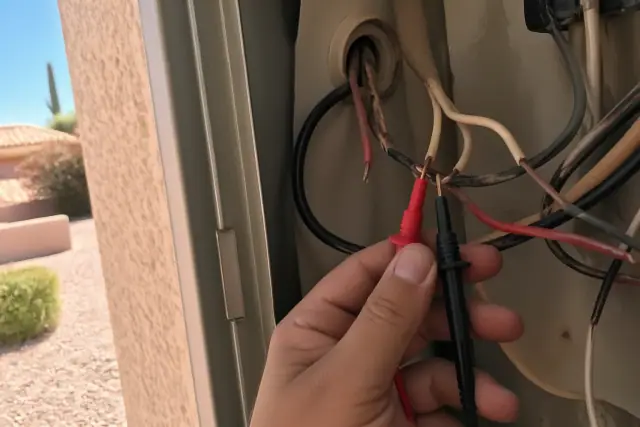
Burning odors, sparking outlets, exposed wiring, and a dead main panel require prompt attention. We isolate the affected circuit, make the repair when possible, or stabilize the system until the needed parts are available.
Explore Service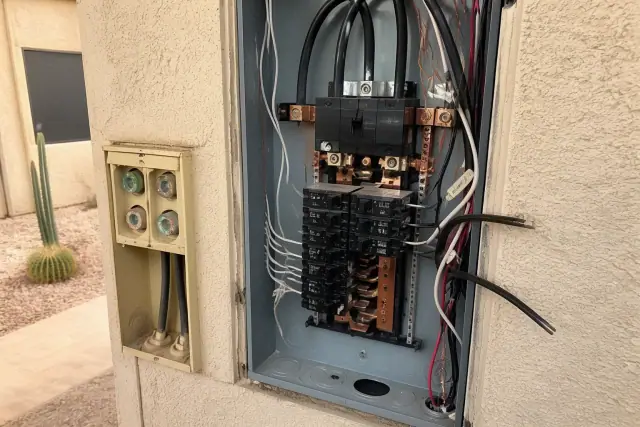
We replace outdated fuse boxes and undersized 60-amp or 100-amp panels with 150-amp or 200-amp main panels and subpanels when the property load calls for more capacity.
Explore Service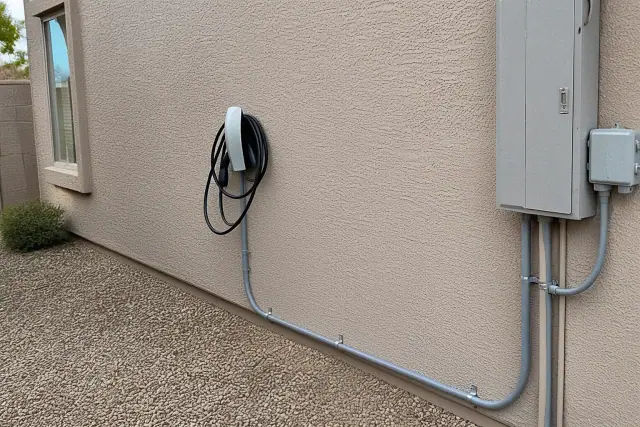
Level 2 and Tesla charger connections include a panel-capacity assessment, a dedicated circuit sized to the charging equipment, county permitting when required, and load testing after installation.
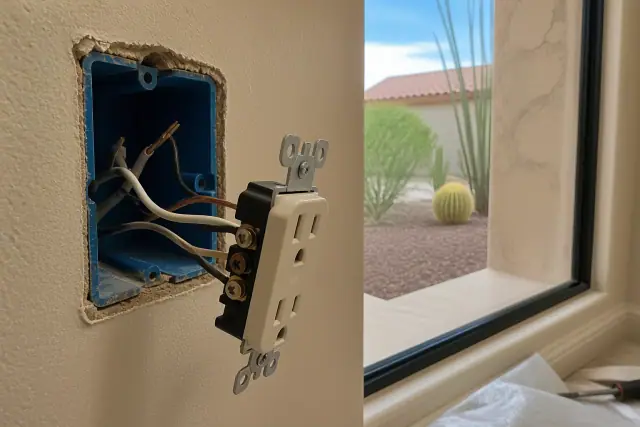
We install standard, GFCI, USB, dimmer, and smart devices and correct two-prong outlets or ungrounded circuits found in older homes. Replacement typically costs $100-$250 per device, depending on access and required code updates.
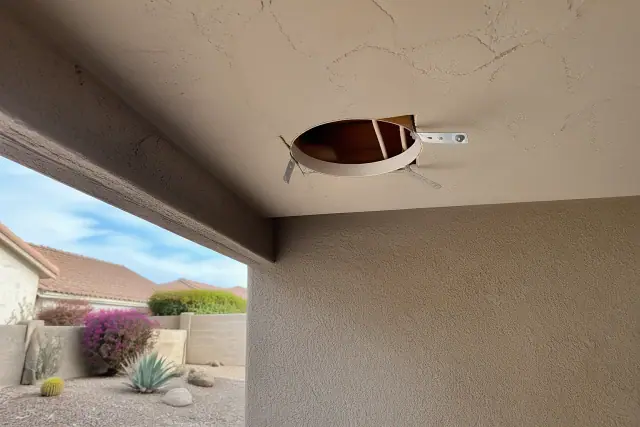
Recessed, under-cabinet, chandelier, sconce, track, landscape, and pool-area lighting can improve function and visibility. Fixture installation generally runs $100-$300 based on the fixture and existing wiring.
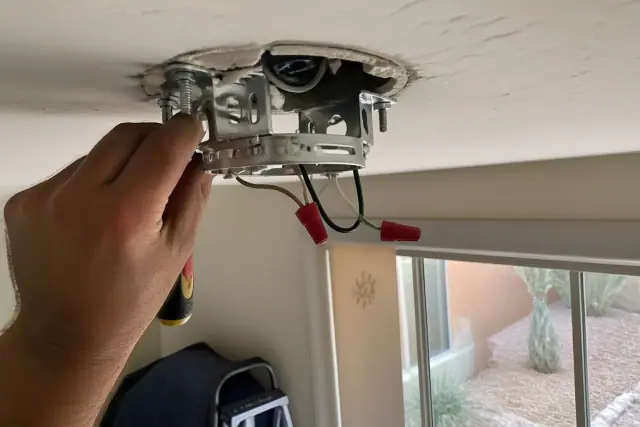
We install and wire ceiling fans where the existing box, circuit, and controls can safely support the fixture, addressing switch or wiring needs as part of the installation.
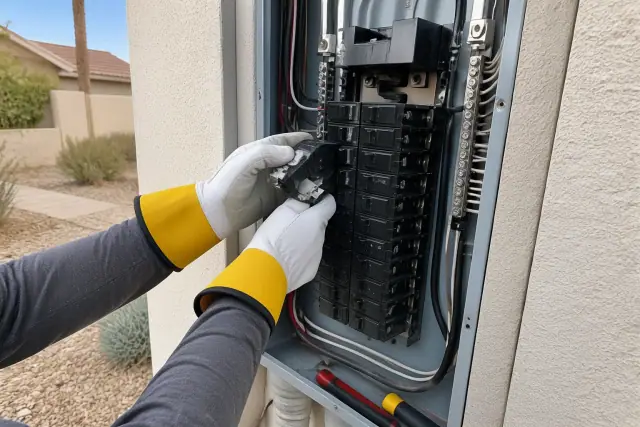
Repeated trips can indicate overloads or wiring faults, so we test before replacing a breaker. Confirmed breaker replacement typically runs $150-$300 depending on panel type and amperage.
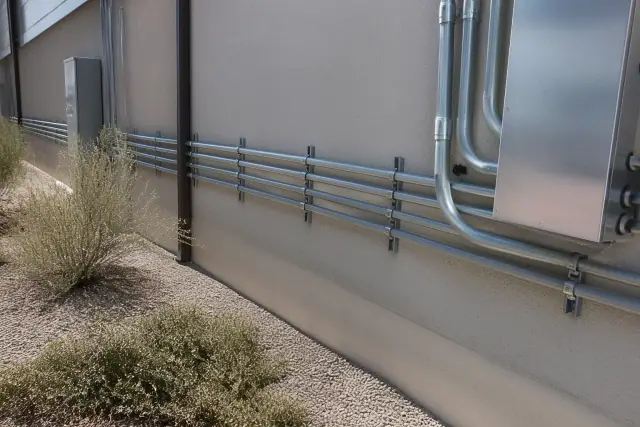
Medical offices, retail plazas, and service businesses can schedule troubleshooting, lighting-circuit work, panel maintenance, and code-required repairs around operating hours, with documentation for inspections and insurance.
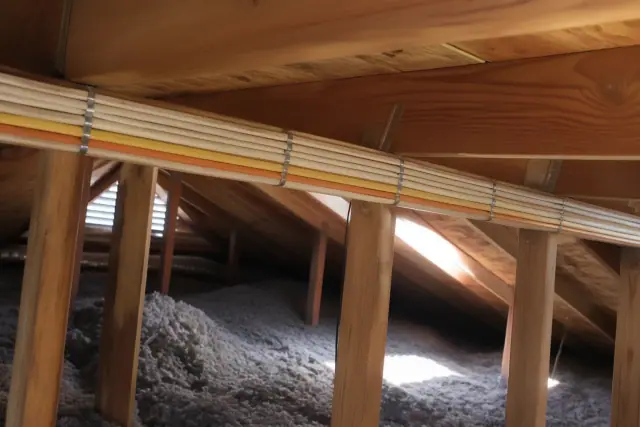
Whole-home rewiring replaces outdated conductors with copper wiring sized for current loads, corrects grounding deficiencies, and can be phased to limit disruption. Targeted aluminum-to-copper pigtails and dedicated circuits are also available when a full rewire is not yet planned.
The right repair starts with evidence about the fault, the property load, and the condition of existing wiring and panels. For systems approaching or exceeding 50 years of age, that evaluation should also account for grounding, aluminum connections, breaker condition, and the capacity needed for modern equipment.
Circuit tracing, voltage and continuity measurements, thermal imaging, and load tests help identify the actual fault before parts are approved for replacement.
Panel upgrades, rewiring, and most new circuits are permitted through Maricopa County Planning and Development. Electrical code cycles are updated every three years, so the project scope should reflect the requirements that apply now.
An electrician should compare existing service capacity with air conditioning, appliance, electronics, solar, and EV-charging demand before recommending a panel or circuit addition.
Connections in aluminum branch wiring from the 1965-1973 era require appropriate inspection and approved copper pigtails or connectors rather than an ordinary device swap.
After the fault is identified, you should receive a plain-language explanation of the repair, required code work, and price before work begins.
For sparking, burning odors, exposed conductors, or total panel loss, the immediate priority is to isolate danger and safely restore or stabilize the affected system.
Extended periods above 110°F can accelerate insulation brittleness, contact expansion and contraction, and panel-component aging. Most electrical components have a realistic service life of 20 to 25 years under normal conditions, while many original Sun City systems are well beyond that window.
Request TroubleshootingA breaker that trips under load may be responding to an overloaded circuit, a wiring fault, or heat-weakened components. Testing the circuit and breaker reveals whether repair, load redistribution, or replacement is appropriate.
Warm or discolored faceplates can signal a loose or deteriorating connection, especially where older aluminum conductors meet devices. The circuit should be inspected before the connection overheats further.
Flickering lights and intermittent power may trace to a loose neutral, failing device, damaged conductor, or panel connection. Voltage, continuity, and circuit-tracing tests help narrow the cause.
A burning smell, visible spark, or exposed wire is an active safety concern. Stop using the affected device or circuit and arrange an electrical assessment so the hazard can be isolated.
Original 60-amp and 100-amp panels may not support central air conditioning, large appliances, and EV charging at the same time. Load calculations determine whether targeted circuit work or a larger service is warranted.
Lightning and grid-switching events can send voltage spikes through branch circuits, gradually damaging electronics, HVAC controls, and appliance boards. Whole-home surge protection at the main panel adds protection before spikes reach connected devices.
Electrical work in older Sun City properties benefits from local housing knowledge, measured diagnostics, and a clear path through county permitting. Phoenix Electrician Co. combines residential and commercial capability with documentation and final testing.
Phoenix Electrician Co. is registered with the Arizona Registrar of Contractors and carries the applicable licensing, bonding, and insurance for residential and commercial electrical work.
Our electricians work across original ranch homes, manufactured and site-built residences, medical offices, retail spaces, and service businesses throughout the community.
After repairs, we test the circuit under load, restore power, clean the work area, and provide county-inspection documentation when a permit is part of the job.
Each visit moves from the reported symptom to testing, a clear recommendation, the authorized repair, and verification under load. County inspection and documentation are added when the project requires a permit.
Tell us about tripped breakers, dead outlets, flickering lights, heat, sparking, or burning odors so the electrician can arrive with suitable diagnostic equipment.
On site, we visually inspect devices, wiring access points, panel connections, and signs of overheating or prior repairs.
A multimeter and circuit tracer check voltage and continuity, while thermal imaging can reveal heat buildup at breakers and connections.
We explain the confirmed cause, the repair or upgrade required, applicable code items, and the cost before authorized work begins.
After replacing or correcting the failed component, we energize the circuit and test it under load to confirm the repair holds.
When a permit is required, we schedule the Maricopa County inspection, close out the work, and provide documentation for your records.
Case Study 1: Older Wiring Safety: Inspection can identify aluminum connection points, missing grounding, outdated two-prong outlets, and gaps in GFCI or AFCI protection before they become larger repair issues.
Case Study 2: Modern Load Capacity: Panel and circuit evaluation can determine whether air conditioning, appliances, electronics, solar, or EV charging require dedicated circuits or a 150-amp or 200-amp service.
Case Study 3: Surge and Code Protection: Whole-home surge devices, ground-fault coverage, arc-fault coverage, and permitted upgrades can reduce exposure to monsoon spikes and bring older installations closer to current requirements.
Describe the electrical problem, property type, and any recent heat, surge, or load-related symptoms. Phoenix Electrician Co. will help arrange the appropriate diagnostic, repair, installation, or emergency response.
These answers cover diagnostic pricing, older wiring, panels, permits, repair timing, safety upgrades, and installations for Sun City homes and businesses. Call if your situation involves active sparking, a burning odor, exposed wiring, or complete panel failure.
Call an ElectricianA standard diagnostic visit runs $75-$150, and that fee is applied toward the repair when you proceed. Simple repairs are typically $150-$300, while wiring faults, panel problems, or multiple circuits can run $300-$800 or more. Emergency and after-hours calls generally cost 50-100 percent above standard daytime pricing.
Homes built or rewired between 1965 and 1973 are the most likely to have aluminum branch circuits. Warm or discolored faceplates and unexplained flickering can be warning signs, but confirmation requires an electrician to inspect conductors at selected outlets or switches. Federal consumer-safety research found connection points in homes wired with aluminum during this era were roughly 55 times more likely to reach fire-hazard conditions than those in copper-wired homes.
Replacement is often appropriate when a panel is rated below 100 amps or shows burning, breaker failure, or repeated trips across several circuits. A single breaker or wiring repair can make sense when testing shows the panel itself remains sound. A full panel assessment helps match the decision to current and planned loads.
Many outlet, breaker, or fixture-wiring repairs take one to three hours and can be completed during the same visit. A panel upgrade usually takes a full day plus the required Maricopa County inspection. Whole-home rewiring may take several days to a couple of weeks depending on square footage and access.
Because Sun City is unincorporated, electrical permits are handled by Maricopa County Planning and Development. Panel upgrades, rewiring, and most new circuits generally require permits and inspections, while a simple like-for-like outlet or switch replacement typically does not. Phoenix Electrician Co. pulls required permits and schedules county inspections for its work.
The work includes assessing available panel capacity, installing a dedicated circuit sized to the charger amperage, mounting and connecting the unit, completing required county permitting, and testing under load. If the panel cannot support the added demand, the electrician will discuss whether a panel upgrade is needed before installation.
Sparking devices, burning odors, exposed wiring, or a main panel that has lost power are active hazards that warrant prompt assessment. Stop using the affected device or circuit when it is safe to do so. An electrician can isolate the fault, complete the repair, or stabilize the system until parts are available.
Yes. Troubleshooting, lighting-circuit work, panel maintenance, and code-required repairs for medical offices, retail plazas, and service businesses can be planned around operating hours. Work is documented for inspection and insurance records.
Outlet and switch replacement typically costs $100-$250 per device, depending on wiring access and code updates. Options include standard, GFCI, USB, dimmer, and smart devices, along with corrections for two-prong or ungrounded outlets.
Light fixture installation generally runs $100-$300 depending on fixture type and the condition of existing wiring. The service can cover recessed, under-cabinet, chandelier, sconce, track, landscape, and pool-area lighting.
Many original homes have 60-amp or 100-amp panels. When load calculations show more capacity is needed, Phoenix Electrician Co. installs 150-amp and 200-amp main panels and subpanels. The appropriate size depends on existing and planned air-conditioning, appliance, solar, and EV-charging loads.
A confirmed breaker replacement typically runs $150-$300 depending on the panel type and breaker amperage. Because repeated tripping can point to an overload or wiring fault, the circuit and breaker should be tested before replacement.
A surge-protection device installed at the main panel intercepts voltage spikes before they reach branch circuits and connected equipment. It can reduce exposure for electronics, appliance control boards, and HVAC components, while point-of-use protection can supplement it for sensitive devices.
Repeated trips on multiple circuits, visible conductor damage, warm outlet covers, grounding deficiencies, or aluminum wiring without approved connections can justify a rewiring assessment. A full rewire replaces outdated conductors with copper sized to current loads, while targeted copper pigtails and dedicated circuits may address narrower needs.
Ground-fault protection is required in kitchens, bathrooms, garages, and exterior outlet locations, while current code requires arc-fault protection in most living spaces. Older Sun City homes often lack some of this coverage, so an electrician can identify gaps during a service call and recommend appropriate upgrades.