Proudly serving Phoenix, Scottsdale, Glendale, Peoria, Paradise Valley, Tempe & surrounding areasCall or Text 24/7: 480-264-8603
Aerial drone view of a suburban neighborhood and desert landscape with Saguaro cacti in Phoenix, AZ.

Electrical Panel Upgrades, Load Center Replacement & Amp Conversions in Phoenix, AZ

Phoenix Electrician Co. provides electrical panel upgrades, main panel replacements, and 100-to-200-amp conversions in Phoenix, AZ. We replace outdated load centers and install the capacity needed for central air conditioning, EV chargers, and modern appliance loads. Our electricians also handle circuit breaker repair and replacement, EV charger installation, whole home rewiring, outlet and switch installation, and lighting and ceiling fan installation. We serve residential and commercial properties across Phoenix and the Valley.

Phoenix heat can push older 60-amp and 100-amp panels beyond the loads they were designed to carry. Repeated breaker trips, flickering when the air conditioner starts, a warm panel cover, or a burning odor all deserve professional attention. Our licensed and insured crews calculate loads to NEC Article 220 standards before recommending equipment. We pull the required permit and coordinate service disconnects and meter work with Arizona Public Service or Salt River Project.

Every panel-upgrade quote includes permit fees, utility coordination, and final inspection so the written scope is clear before work begins.

Phoenix Electrician Co. provides electrical panel upgrades throughout Phoenix and the surrounding metro, including Scottsdale, Tempe, Mesa, Chandler, and Glendale.

★ ★ ★ ★ ★4.9/5 Average Rating · 20+ Years of Experience · Thousands of Customers Helped · Licensed & Insured · Residential & Commercial

Electrical Panel Upgrade Options & Benefits

What Is an Electrical Panel Upgrade?

An electrical panel upgrade replaces the main service panel and breakers with equipment sized for the property's calculated load. A capacity increase may also require new service entrance conductors, a meter socket, and grounding components.

Many Phoenix homes built before 1980 still use 60-amp or 100-amp service installed before rooftop solar, EV charging, and multiple HVAC units became common. A 5-ton condenser plus a pool pump can consume the headroom that an older panel once had.

An overloaded or corroded panel creates fire and shock hazards, not merely an inconvenience. Adding outlets, a ceiling-fan circuit, or an EV charger without first addressing an undersized panel only increases the load on equipment already at capacity.

Benefits of Upgrading Your Panel

A properly sized panel gives modern electrical loads dedicated space, current protective devices, and a code-compliant foundation for future improvements.

  • Capacity for central air conditioning, an EV charger, an electric range, and workshop equipment
  • AFCI and GFCI breaker protection where current code requires it
  • Updated grounding and bonding for a safer service
  • Fewer nuisance trips and voltage-related flickers when inadequate capacity is the cause
  • Breaker space for new outlets, switches, lighting, and ceiling fans
  • A path for rooftop solar, battery backup, a hot tub, or a second HVAC system
  • An updated panel for home inspections and insurer questions about panel brand and age
  • Headroom for a future addition without planning another upgrade in five years
Panel Upgrade Services

Electrical Panel Upgrade Services

We match the scope to the existing service, calculated demand, panel condition, and planned equipment. Work ranges from replacing a failing load center to expanding residential capacity or upgrading a three-phase commercial panel.

200-Amp Service Upgrades

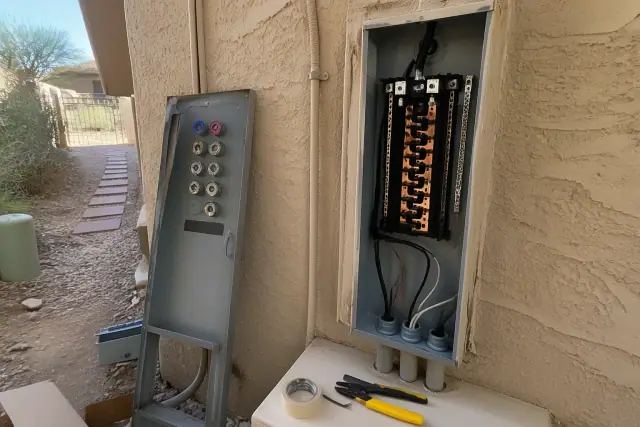
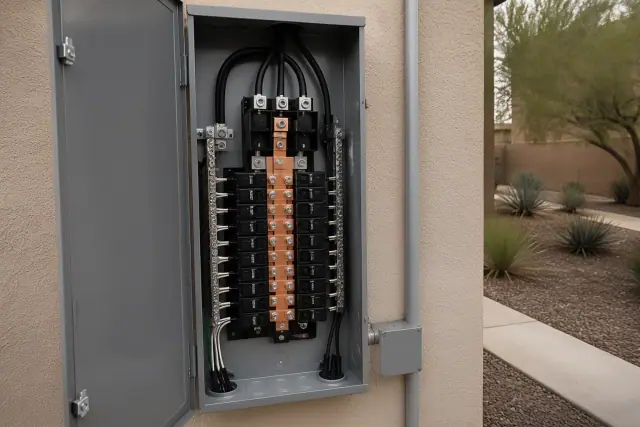
New electrical panel upgrade with copper bus bars replacing an old fuse cabinet at a home in Phoenix, AZ.

We upgrade service capacity for homes whose HVAC, appliances, EV charging, pool equipment, or planned additions exceed the safe headroom of an older panel. The recommendation follows a load calculation rather than a one-size-fits-all assumption.

Request Estimate

Main Panel Replacement

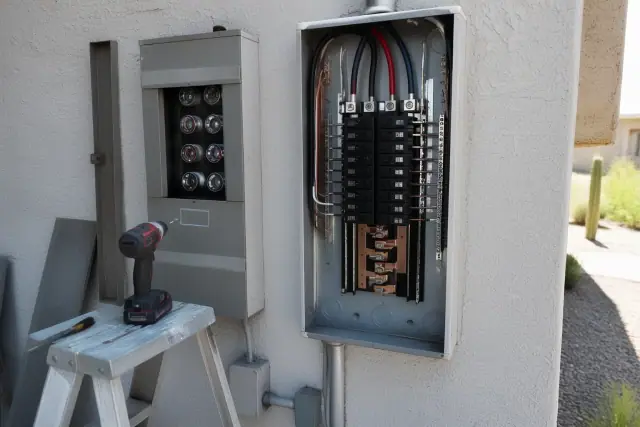
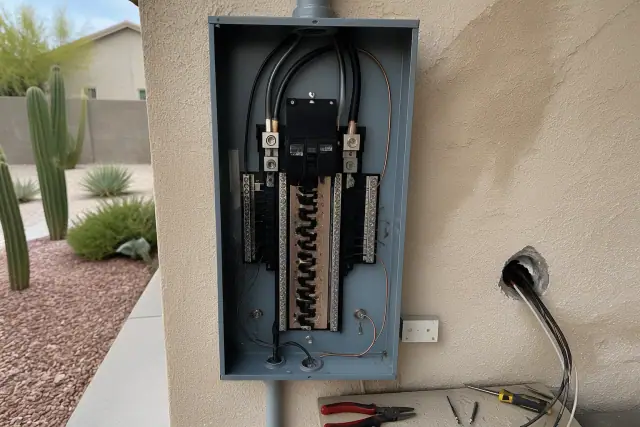
New electrical panel installation with wiring and tools at a home in Phoenix, AZ.

We remove an aging, damaged, or recognized problem panel and install a new load center, matched breakers, and a grounding system that meets current requirements. Replacement can address heat damage, corrosion, poor breaker reliability, or a panel that has reached the end of its useful life.

Request Estimate

100-to-200-Amp Conversions

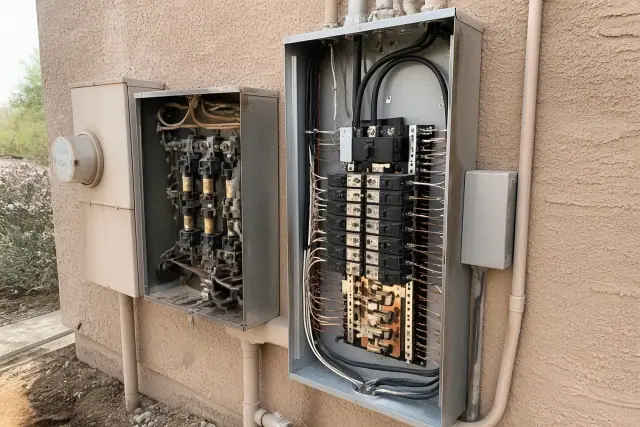
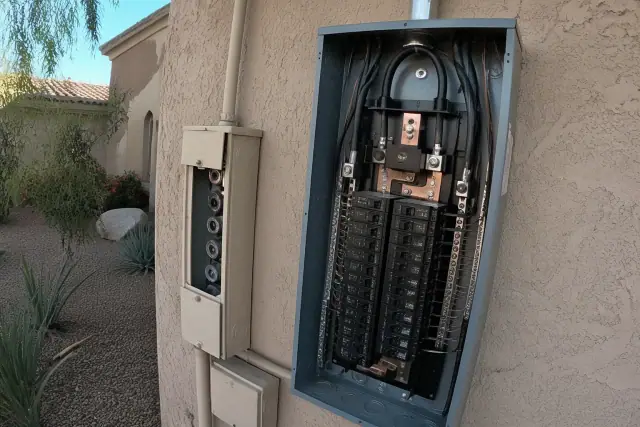
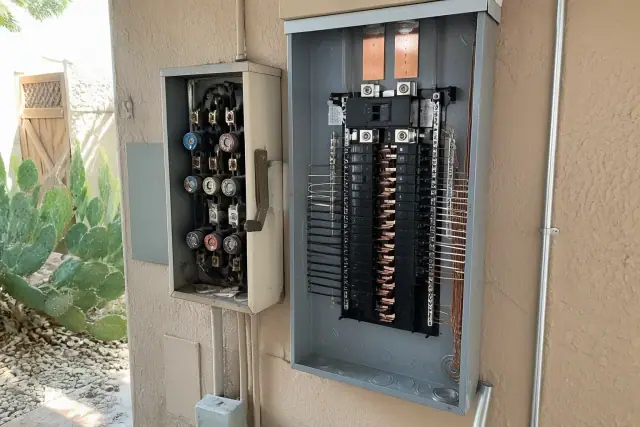
Electrical panel upgrade replacing an old fuse cabinet on a stucco wall in Phoenix, AZ.

A full conversion commonly includes service entrance conductors, a meter socket, a 200-amp panel and breakers, and grounding-electrode upgrades. We also coordinate utility work if the service drop must change before the panel-side installation can be completed.

Request Estimate

Residential Panel Upgrades

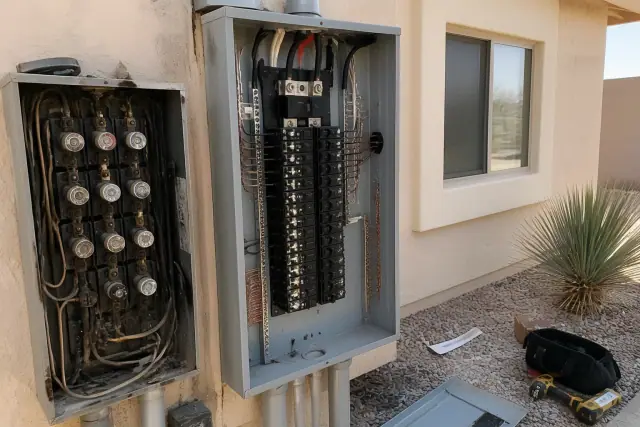
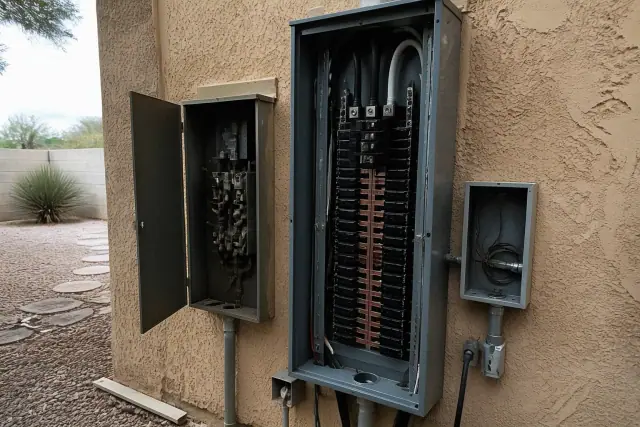
Old fuse cabinet being replaced with a new electrical panel on a stucco home in Phoenix, AZ.

Residential work can combine panel replacement with AFCI and GFCI protection, circuit-breaker replacement, whole home rewiring, or updated outlets and switches when the inspection shows those items are needed. Existing branch wiring can often remain when it is correctly sized and in good condition.

Request Estimate

Commercial Panel Upgrades

New commercial electrical panel installation on a stucco wall in Phoenix, AZ.

We size commercial panels around connected load, demand factors, and future expansion for equipment such as HVAC, refrigeration, and heavier machinery. Work can be phased around business hours, with temporary power considered when critical systems cannot tolerate a full shutdown.

Request Estimate

Emergency Panel Service

Electrical panel upgrade replacing an old fuse cabinet at a residential home in Phoenix, AZ.

Our 24/7 support covers panel failures, breaker malfunctions, arcing, and total or partial power loss across the Phoenix metro. We prioritize same-day response when a panel fails outright, feels hot, smells like burning plastic, or shows visible sparking.

Request Estimate
Panel Upgrade Configurations

Panel Upgrade Configurations

The right configuration depends on capacity, equipment condition, service entrance needs, property type, and future loads. These common scopes show what may be included after inspection and calculation.

New 200-amp electrical panel installed on a stucco wall at a jobsite in Phoenix, AZ.

200-Amp Capacity Expansion

Most Phoenix homes built after 2000 came with 200-amp service, while many homes from the 1960s through 1980s still operate at 60 to 100 amps. A national survey found that 62% of U.S. single-family homes now have 200-amp panels, with adoption climbing sharply after 1960 and again in recent decades.

  • More headroom than an older 100-amp panel
  • Capacity planning for central air conditioning that can draw 20 to 60 amps
  • Room for EV charging and modern kitchen appliances
  • Load calculation based on square footage, HVAC tonnage, and appliances
  • Higher-capacity review for homes with a pool, spa, and dual EV chargers
Request Estimate
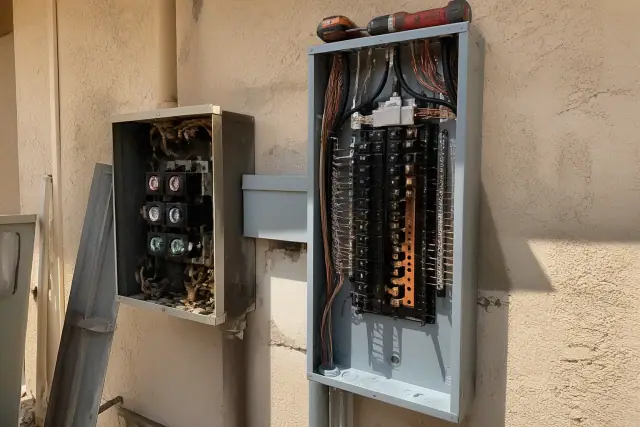
Mid-progress electrical panel upgrade with exposed wiring and tools on a stucco wall in Phoenix, AZ.

Main Panel Replacement

A circuit-breaker panel has a functional lifespan of roughly 25 to 40 years. Replacement is especially important when inspection finds corrosion, heat damage, unreliable breakers, or an older Federal Pacific, Zinsco, or Stab-Lok panel.

  • New load center matched to the calculated demand
  • New breakers sized for their connected circuits
  • Grounding and bonding tested before closeout
  • Municipal inspection before the work is considered complete
  • Separate findings for unsafe branch wiring discovered during inspection
Request Estimate
A new electrical panel installation replacing an old fuse cabinet on a stucco wall in Phoenix, AZ.

Service Entrance Conversion

A 100-to-200-amp conversion reaches beyond the breaker box when the service entrance must also change. Utility scheduling is often the longest step and can add a few days depending on workload.

  • New service entrance conductors
  • New meter socket when the scope requires it
  • New panel and matched breakers
  • Grounding-electrode upgrades for current requirements
  • Utility service-drop work when existing infrastructure is insufficient
Request Estimate
New electrical panel installation with copper wiring and labeled circuits on a stucco wall in Phoenix, AZ.

Residential Safety Modernization

Homes over 40 years old may have original panels, wiring, and devices reaching the end of service life together. We identify what can remain and what should be addressed separately rather than assuming every panel upgrade requires a full rewire.

  • AFCI protection evaluated under NEC 210.12
  • GFCI protection evaluated under NEC 210.8
  • Circuit-breaker replacement where protection is outdated or faulty
  • Whole home rewiring only when branch-wiring condition supports that scope
  • Every circuit tested after power is restored
Request Estimate
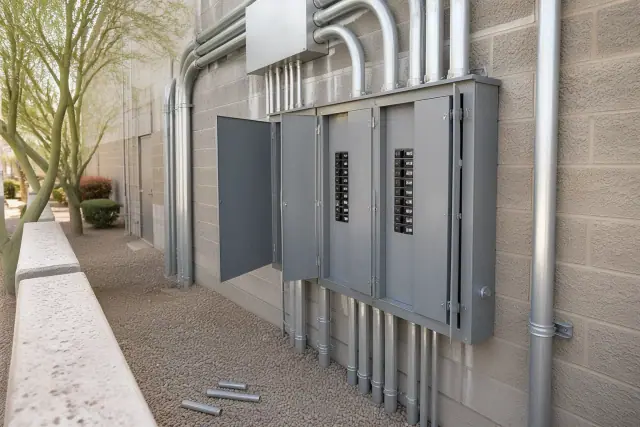
Three-phase electrical panel installation on a warehouse wall in Phoenix, AZ.

Commercial Three-Phase Panels

Commercial properties often use three-phase power for loads that single-phase residential service cannot support. Panel labeling, working clearance, and disconnect accessibility are reviewed under NFPA 70 and applicable local fire-code requirements.

  • Sizing for HVAC, refrigeration, and machinery loads
  • Demand factors and future expansion included in planning
  • Work scheduled around business hours when possible
  • Phased disconnects to limit tenant downtime
  • Temporary power considered for critical systems
Request Estimate
A Code-Conscious Plan

Choosing the Right Upgrade Approach

We choose the scope after inspecting the existing equipment and calculating demand from square footage, HVAC tonnage, appliances, and planned loads. That evidence determines whether the property needs a panel replacement, a 200-amp service upgrade, or a broader service-entrance conversion.

Load Calculations First

We perform a full NEC Article 220 load calculation before opening the panel or recommending an amperage. The calculation accounts for the property's actual HVAC and appliance demands instead of relying on a generic upgrade package.

Permits and Utility Scheduling

We pull the City of Phoenix or applicable municipal permit and arrange the disconnect and reconnect with Arizona Public Service or Salt River Project. Coordinating these steps keeps meter and service work aligned with inspection requirements.

Licensed and Insured Panel Work

Phoenix Electrician Co. is licensed through the Arizona Registrar of Contractors and carries full insurance for panel upgrades, subpanel installations, and main panel replacements. Our crews test grounding and bonding against NEC 250 requirements before closing the panel.

When to Call

Know the Panel Warning Signs

Breaker behavior, heat, light changes, and insufficient capacity can all point to a panel that needs inspection or replacement. Visible sparking, scorch marks, a burning-plastic smell, or a hot panel should be treated as immediate safety concerns.

Request Panel Inspection

Breakers Trip Repeatedly

Breakers that trip during normal use can signal an overloaded circuit, a failing breaker, or a panel without enough capacity. The cause should be tested before more circuits or equipment are added.

Heat or Burning Odors

A warm or discolored panel cover and a persistent burning smell can indicate overheated connections or damaged components. Do not ignore those signs or keep resetting a breaker without an electrical inspection.

Lights Flicker Under Load

Lights that flicker or dim when the air conditioner starts can be a symptom of heavy demand or another electrical fault. We inspect the circuits and service capacity to identify the reason rather than assuming the panel is the only cause.

No Capacity for New Loads

An EV charger, second HVAC system, workshop, or solar installation with battery backup may not clear a load calculation on a 100-amp service. Expanding the service first prevents new equipment from being placed on a system already at its limit.

Outdated Problem Panels

Federal Pacific, Zinsco, and Stab-Lok panels are associated with breaker-reliability concerns, including breakers that may fail to trip during an overload. We generally recommend replacing these recognized problem panels after confirming the equipment on site.

Sparking or Partial Power Loss

Visible arcing, scorch marks, power lost to half the house, or total power loss during Phoenix heat can indicate a serious panel or service failure. If the main breaker can be reached safely, shut it off and call for immediate electrical help.

How It Works

Our Electrical Panel Upgrade Process

A standard residential panel replacement usually takes about a half day to a full day, with power typically off for a few hours during the actual swap. Relocation, service-drop work, or other service-entrance changes can extend the schedule.

01.

Inspect and Calculate Load

We inspect the panel, service entrance, grounding, and branch-wiring condition, then complete the NEC load calculation. The findings define the required capacity and any separate wiring concerns.

02.

Prepare the Written Scope

We provide a firm number after the on-site inspection because conductor length, panel location, wiring condition, and meter work affect the price. The scope separates permit fees, labor, and materials.

03.

Permit and Coordinate Utility Work

We submit the municipal permit and schedule the service disconnect with the property's utility. Meter or service-drop work is coordinated before the installation date when the upgrade requires it.

04.

Disconnect and Remove Safely

Power is shut off at the meter, and the service is de-energized and locked out before conductors are touched. We then remove the old panel and prepare the service for the approved equipment.

05.

Install, Ground, and Bond

We install the new load center, matched breakers, and approved service components. Grounding and bonding are tested against NEC 250 before the panel is closed.

06.

Inspect, Restore, and Test

The City of Phoenix or applicable municipality completes the final inspection, and the utility restores service. We test every circuit after power returns before considering the job complete.

Plan the Right Upgrade

Schedule an Electrical Panel
Assessment

Request an on-site panel inspection and load calculation for a clear scope based on your existing service, wiring condition, and planned electrical loads. We handle the permit, utility coordination, installation, and final inspection for Phoenix-area residential and commercial properties.

Panel Upgrade Help

Electrical Panel Upgrade FAQs

Get practical answers about panel-upgrade cost, timing, capacity, code work, and utility coordination in Phoenix.

Call Our Electricians

A basic panel replacement in the Phoenix market typically runs $1,000 to $3,000. A full 100-amp to 200-amp service upgrade generally falls between $2,000 and $5,600, depending on wiring condition, panel location, and service-entrance work. We provide an exact number after inspecting the property rather than quoting blind by phone.

An upgrade may be needed when breakers trip during normal use, the panel is undersized for current demand, or new equipment will not clear a load calculation. Panels roughly 25 to 40 years old are also near the end of their functional service life. Federal Pacific, Zinsco, and Stab-Lok equipment warrant particular attention because of breaker-reliability concerns.

An electrical panel upgrade replaces the main service panel and breakers with equipment that can safely handle the calculated electrical load. A capacity increase can also involve service entrance conductors, the meter socket, grounding components, and current AFCI or GFCI protections. The work is permitted and inspected before closeout.

Adding breakers does not increase the amperage rating of an undersized service and does not solve an overloaded panel. The panel must also have approved breaker space and capacity for the new circuit. An upgrade addresses those limits and allows current protective devices to be installed where required.

Panel upgrades should be completed by a licensed electrical contractor because they involve permits, utility coordination, service conductors, and code inspection. Phoenix Electrician Co. handles the process for homes and businesses in Phoenix, Scottsdale, Tempe, Mesa, Chandler, and Glendale. We are licensed through the Arizona Registrar of Contractors and insured for residential and commercial panel work.

In many cases, yes. A service upgrade replaces the panel, breakers, and service entrance components, while correctly sized branch circuits in good condition may remain. If inspection finds deteriorated, undersized, or unsafe branch wiring, we identify that work separately.

Most residential panel replacements take about a half day to a full day, with power typically off for a few hours during the swap. A relocation or full service upgrade can take longer. Utility scheduling for a service drop or meter can add a few additional days.

An upgrade can be worthwhile when an older or undersized panel limits safe use of HVAC, appliances, EV charging, or new circuits. It also addresses recognized problem panels and can reduce concerns raised during home inspections or insurance review. The value depends on the panel's age, condition, and calculated load.

Yes. We coordinate the disconnect and reconnect with Arizona Public Service or Salt River Project, depending on the property's provider. If the service drop or meter work must change, we align that utility work with the municipal permit and inspection schedule.

These older panel types are known for breaker-reliability concerns, including breakers that may not trip properly during an overload. We generally recommend replacement after confirming the panel type and condition on site. Heat, discoloration, or burning odors make prompt inspection especially important.

It can when the selected service capacity and panel space meet the calculated demand. We include the EV charger, rooftop solar with battery backup, HVAC equipment, and other planned loads in the calculation. Homes with a pool, spa, and dual EV chargers may need more than a standard recommendation.

Commercial properties may use three-phase panels for HVAC, refrigeration, and machinery loads that residential single-phase service does not handle. Sizing accounts for connected load, demand factors, and future expansion. Scheduling can also involve phased disconnects or temporary power to limit business downtime.

A hot panel, visible sparking, scorch marks, a burning-plastic smell, or total or partial power loss should not wait for a routine appointment. If you can reach the main breaker safely, shut it off and call immediately. Do not touch the panel if reaching it appears unsafe.