Typical Installed Cost
A straightforward single breaker swap in Phoenix commonly costs $100-$300. Special breaker types or panel damage can push the broader typical total to $100-$400.
Phoenix Electrician Co. handles circuit breaker replacements every week for homes and businesses across the Salt River Valley, including Encanto-Palmcroft, Ahwatukee, and Desert Ridge. A single replacement typically costs $100-$400 with parts and labor combined. The final quote depends on amperage, breaker type, panel condition, and whether the fault is actually in the breaker rather than the wiring.
A straightforward single breaker swap in Phoenix commonly costs $100-$300. Special breaker types or panel damage can push the broader typical total to $100-$400.
Amperage, pole count, panel access, breaker type, and bus bar condition affect the price. Double-pole 240-volt and GFCI/AFCI breakers generally cost more than basic single-pole units.
The electrician should confirm that the breaker, rather than the circuit wiring, is at fault. Buzzing, immediate retripping, heat, scorch marks, or melted plastic can point to a more involved panel problem.
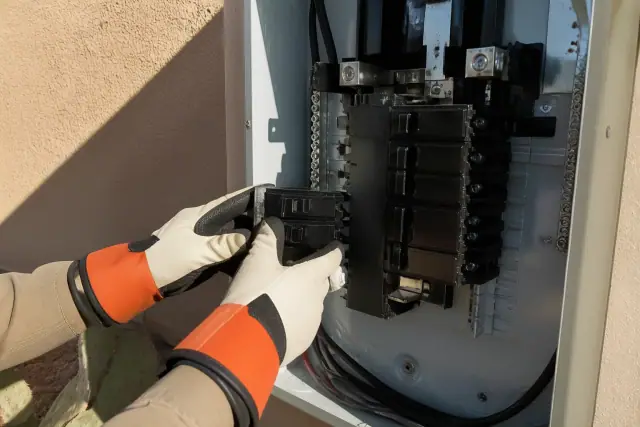
A clear panel view should contrast 15A and 20A single-pole 120-volt breakers with 30A or 240-volt double-pole breakers. Double-pole circuits may feed dryers, HVAC equipment, ovens, or EV chargers.
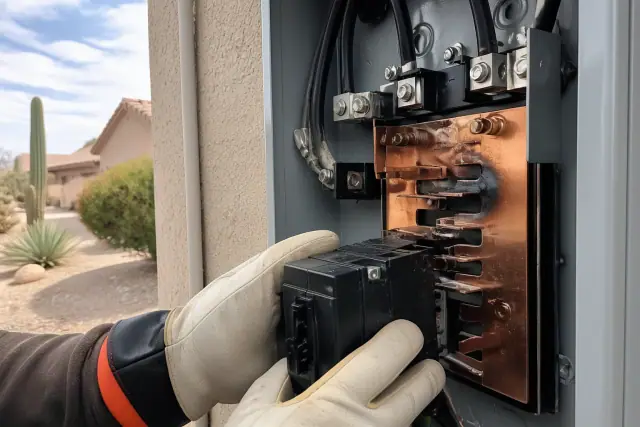
Pitting, corrosion, scorch marks, and melted plastic where the breaker connects. These conditions can turn a simple swap into bus bar repair or panel replacement.
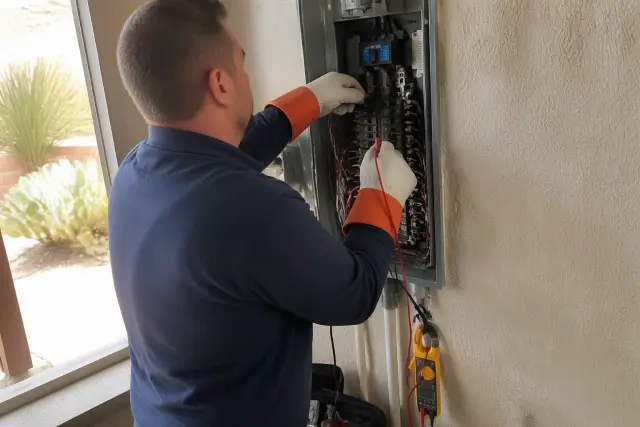
The replacement torqued to manufacturer specifications and tested under load. The installed amperage must match the circuit's load calculation.
The diagnostic or service-call fee is typically $75-$125 and is often applied to the repair when work proceeds during the same visit. Trade labor runs $40-$120 an hour, although a single-breaker job is often quoted at a flat rate after diagnosis.
A basic 15-amp or 20-amp breaker costs $20-$60 in parts before labor and diagnostic work. Exact parts pricing varies by amperage, pole count, function, and compatibility with the panel.
A single breaker swap takes 30-90 minutes after diagnosis, while main breaker replacement takes 2-4 hours. Full panel replacement usually takes a half day to a full day, plus any required permit and inspection scheduling.
When more than two or three breakers have failed, or the panel shows scorching, corrosion, or an outdated design, full replacement may be more cost-effective than repeated repairs. If the entire panel is compromised, the project generally exceeds $1,000.
| Breaker type | Parts cost | Total installed cost |
|---|---|---|
| 15A single-pole | $5-$20 | $100-$200 |
| 20A single-pole | $6-$25 | $100-$220 |
| 30A single- or double-pole | $15-$40 | $150-$280 |
| Double-pole, 240-volt | $20-$60 | $180-$320 |
| GFCI/AFCI | $40-$90 | $200-$350 |
| Main breaker, 100-200A | $50-$150 | $300-$600+ |
A proper replacement begins with de-energizing the panel and confirming that the breaker, not the wiring, has failed. The electrician removes the failed unit, checks the bus bar and lugs for pitting or heat damage, installs a compatible breaker torqued to manufacturer specifications, and tests it under load. Correct amperage and compliance with NEC and UL circuit breaker requirements matter because an oversized breaker can create a fire hazard.
Amperage, pole count, panel accessibility, and the condition of the bus bar all move the price. Central Phoenix homes with electrical systems from the 1960s, along with homes built before 1975 in areas such as Sunnyslope and Maryvale, may have discontinued panel designs that make compatible breakers harder to source. Panel damage or code-required upgrades can shift the job from a simple breaker swap to a larger repair.
Homeowners insurance rarely covers routine breaker wear, although fire or surge damage caused by a failure may be covered. Replacing a breaker yourself is legal in most cases, but the work still must follow NEC and City of Phoenix permit rules; panel work also exposes hazardous energized components. Main breaker replacement may require utility coordination, and full panel work can require a City of Phoenix or Maricopa County permit and inspection.
Describe the tripping, buzzing, reset problem, breaker amperage, panel age, and any visible heat damage. A diagnostic can confirm whether the breaker, wiring, bus bar, or a larger panel issue is driving the repair scope.