Relying on One Light Source
One ceiling fixture creates flat light, hard shadows, and a single point of failure. Separate ambient, task, and accent lighting can brighten the places people actually use without requiring one oversized fixture.
At Phoenix Electrician Co., the five recurring lighting mistakes we see are relying on one overhead source, mismatching color temperatures, choosing poorly scaled fixtures or output, using non-dimmable LEDs on dimmers, and treating flicker as merely a bad bulb. These mistakes can create glare, shadows, uneven brightness, or hide loose wiring, overloaded circuits, aging breakers, and failing drivers. Recognizing whether the problem is lighting design, fixture compatibility, or an electrical fault helps Phoenix property owners choose a safer, more useful fix.
One ceiling fixture creates flat light, hard shadows, and a single point of failure. Separate ambient, task, and accent lighting can brighten the places people actually use without requiring one oversized fixture.
Warm and cool bulbs in the same sightline make a room look mismatched and unfinished. Choose a consistent range for each space, especially where recessed cans and decorative fixtures are visible together.
A loose connection, overloaded circuit, aging breaker, failing LED driver, or incompatible dimmer can all cause flicker. Recurring symptoms deserve electrical troubleshooting instead of repeated bulb changes.
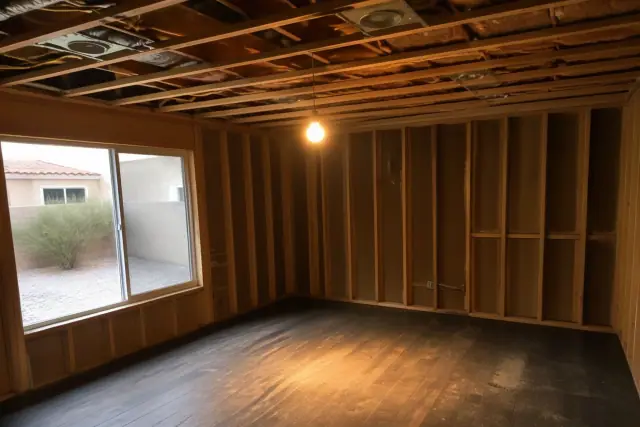
The dark corners and hard shadows that remain when one central fixture is expected to cover an entire room.
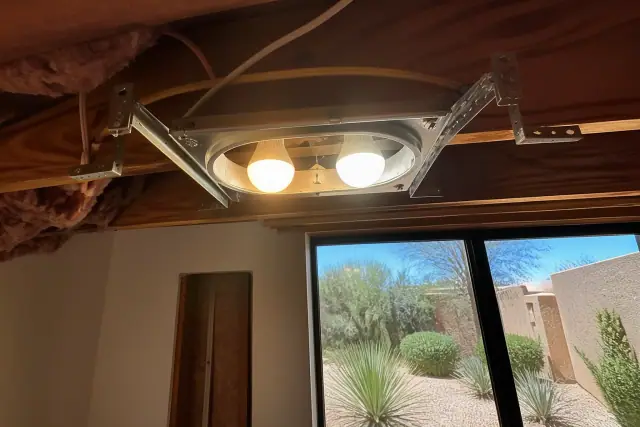
A side-by-side view makes the unfinished appearance of mixed warm and daylight bulbs easy to recognize.
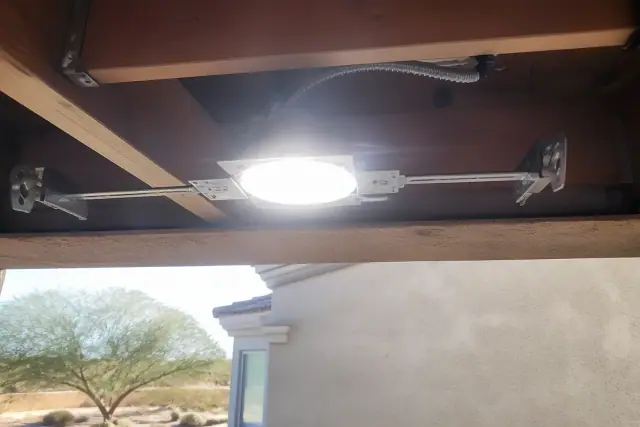
How high-output overhead bulbs reflect from a monitor and create eye-level glare in a home office.
A single 60-watt bulb serving 200 square feet or a 40-watt bulb covering a 20-foot hallway creates uneven light, hard shadows, and dark ends.
Mixing 2700K and 5000K bulbs in one open-concept sightline creates an obvious warm-versus-daylight mismatch.
An oversized chandelier on an 8-foot ceiling can feel crowded, while 5000K, 1,100-lumen bulbs can create glare where 800 lumens on a dimmer would work better.
Visible flicker or unexpected dimming can point to loose wiring, an overloaded circuit, an aging breaker, or a failing LED driver rather than the fixture itself.
| Lighting Mistake | What You May Notice | Better Approach |
|---|---|---|
| One overhead source | Dark corners, flat light, and hard shadows | Layer ambient, task, and accent lighting. |
| Mixed color temperatures | Adjacent fixtures look mismatched | Keep bulbs in the same sightline consistent. |
| Wrong scale or output | Glare, eye strain, or dim work areas | Match fixture size, lumens, and placement to the room. |
| Incompatible dimming | Flicker or limited light control | Pair dimmer-compatible bulbs and controls. |
| Electrical fault dismissed as a bulb | Recurring flicker or dimming | Check the wiring, circuit, breaker, and LED driver. |
A room can satisfy the minimum lighting-outlet requirement in National Electrical Code Section 210.70 and still feel dim or function poorly. Many Phoenix production homes from the 1990s-2000s were wired with one lighting outlet per room, so better results often come from adding task and accent light around the existing ambient source rather than simply increasing wattage.
The right setup depends on the task, ceiling height, furniture placement, glare, and which fixtures share a sightline. General living areas need roughly 10-20 foot-candles, while kitchen task zones need closer to 30-40 foot-candles per Illuminating Engineering Society guidance. Bedrooms often read best at 2700K-3000K, kitchens and bathrooms at 3000K-3500K, and garages or workshops at 4000K-5000K. Phoenix attics regularly reaching 130-150°F can shorten LED-driver life and accelerate insulation breakdown on older wiring.
Poor lighting usually looks like glare, hard shadows, uneven brightness, or a room that stays dim despite bright bulbs. Ceiling lights become a problem when their scale does not suit the ceiling or one central fixture is expected to handle every task. Flicker or dimming calls for electrical troubleshooting when it recurs, and work that requires opening a panel, adding a circuit, or touching aluminum or knob-and-tube wiring belongs with a licensed electrician under National Electrical Code requirements.
Describe the room, fixture, and symptoms you are seeing. A local electrician can help determine whether the problem is layout, fixture compatibility, or the wiring and circuit behind the light.